
AI Song Generator - Mozart
NineGMusic & Audio
4.21.78K Reviews
- Version
- 9.6.0
- Installs
- 1.00M
- Age Rating
- Everyone
Screenshots
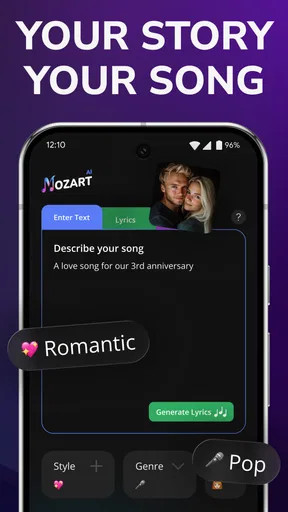
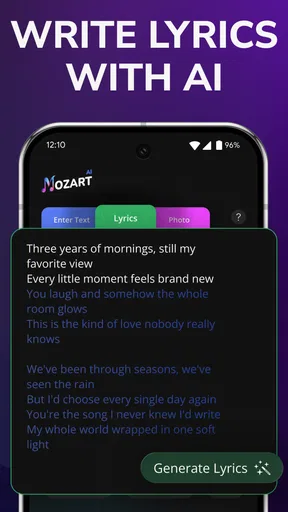
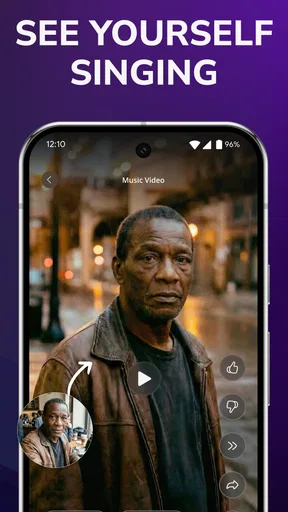
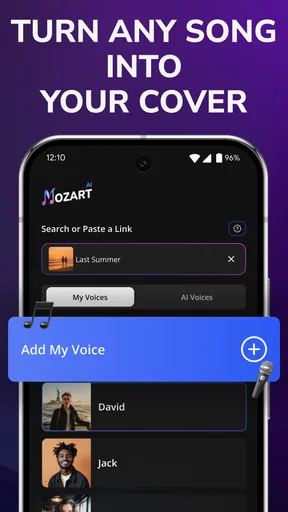
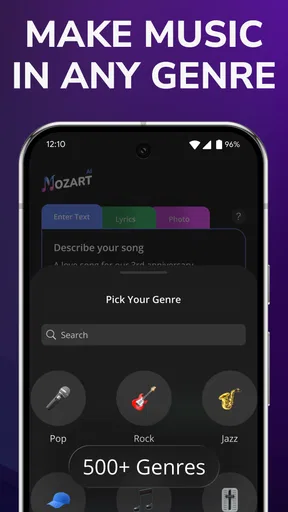
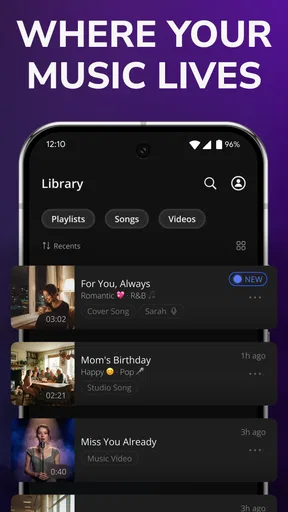
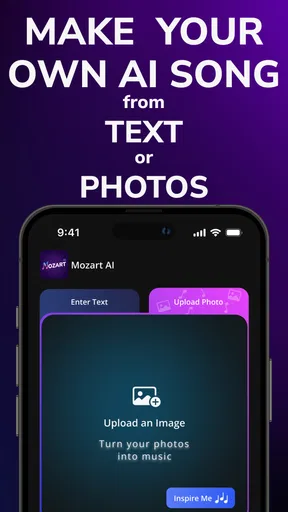
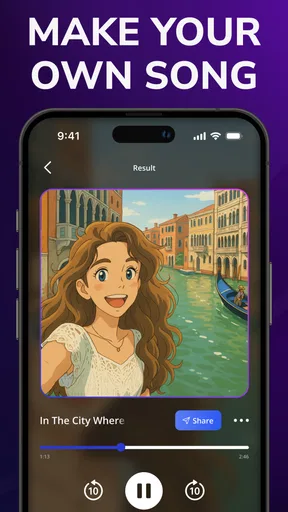
Our Review of AI Song Generator - Mozart
 Analysis by Appyee
If you’re anything like me, you’ve probably spent hours humming tunes in your head, wishing you could somehow translate those melodies into full-blown songs. Well, let me introduce you to AI Song Generator - Mozart AI. This app is like having a mini Mozart in your pocket, ready to compose at your command.
Quick ideas, realistic expectations
For a quick creative prompt, an AI music app can be appealing because it lowers the barrier between an idea and something you can listen to. I’d treat Mozart AI as a starting point for experimentation rather than a shortcut to a finished, release-ready track. That distinction matters: a generated result may help me discover a mood or direction, while a carefully arranged song still calls for deliberate editing and musical judgement.
A useful way to approach a first session is to begin with one clear intention: a mood, a broad style, or a small melodic idea. If I pile several unrelated requests together, it becomes harder to tell which part of the result I want to keep. I’d make one change at a time and listen again before changing anything else. That simple habit makes the process more useful, especially when the first output is close to what I imagined but not quite there.
Getting Started with AI Song Generator - Mozart AI
Diving into the world of music composition with AI Song Generator - Mozart AI is surprisingly straightforward. The app greets you with a sleek and intuitive interface, making you feel like a maestro from the get-go. After a quick sign-up, you're ready to compose. The app is available on both Android and iOS, so no one’s left out of the musical fun.
As you navigate through the app, you’ll notice a variety of options: from creating a new song to exploring existing compositions. The user-friendly layout ensures that even those who aren’t tech-savvy can get started without a hitch. With a few taps, you can choose the genre, style, and mood of your song. It’s like a musical buffet, and you’re the chef!
Features That Hit the Right Notes
One of the standout features of the app is its ability to generate music based on your input. You can hum a tune, input a few notes, or even describe the type of song you’re aiming for. The AI engine then churns out a melody that fits your specifications, often with surprising accuracy. It’s like having a personal composer who gets your vibe.
When I’m trying to get a more useful result, I’d keep the initial prompt focused and treat each generated version as a sketch to compare, rather than judging it as a finished composition. For example, I might first aim for a gentle background feel, then decide whether the melody needs more energy. That makes it easier to notice what the tool contributes and what I still want to change myself. It also helps avoid spending time adjusting several musical elements before I know whether the underlying idea works.
Another cool aspect is the customization options. You’re not limited to the app’s initial output—you can tweak notes, change instruments, and adjust tempos until it sounds just right. It’s this level of flexibility that makes the app appealing to both casual users and serious musicians alike.
There’s a useful trade-off here: more control can make a result feel closer to your idea, but it can also turn a quick experiment into a longer editing session. I’d save a version that has the right overall feel before changing details, so I can return to the stronger starting point if a series of tweaks takes the music in the wrong direction. For someone who already knows what they want to change, those controls are more valuable than simply generating another variation.
Oh, and let’s not forget the collaboration feature. If you’re working with a band or a fellow artist, you can easily share your compositions and work together in real-time. This is a game-changer for remote collaborations, as it bridges the gap between creativity and technology.
Using it in a real creative routine
Imagine I have a spare ten minutes while planning a short video or putting together a rough idea for a personal project. I can use that time to test a musical direction, listen for a melody worth keeping, and make a note of what feels right. The value is not necessarily getting a polished soundtrack in one sitting; it’s having something concrete to react to instead of trying to explain an idea from memory. If I’m working with someone else, sharing a draft can make that conversation more specific: we can discuss the mood and direction of an actual example.
For a songwriter, I see the app working best as a source of prompts when a blank page feels unhelpful. A beginner can use generated material to compare moods and hear how a small change in tempo or instrumentation affects the impression. A more experienced musician may find it useful for early exploration, then prefer a conventional digital audio workstation or an instrument for precise arrangement and production. Those tools are better suited to detailed control over a finished recording, while Mozart AI is more attractive when the goal is to get an idea moving.
Why I Can’t Stop Using It
I’ll admit, I was a bit skeptical at first. Could an app really understand and create music that resonates? But after a few sessions with AI Song Generator - Mozart AI, I was hooked. The app doesn’t just produce random jingles; it crafts melodies that feel personal and unique.
One evening, I was just messing around with the app, trying to create a laid-back jazz tune. I entered some vague ideas and within minutes, I had a smooth, catchy track that I couldn’t stop playing. It’s these moments of surprise and delight that keep me coming back.
Speed, stability, and practical limits
The speed I’d expect from this kind of creative workflow is less about a guaranteed wait time and more about how quickly I can move from a prompt to a useful listening decision. A simple idea is easier to assess than a complicated brief, and the amount of editing I choose to do will affect how long a session lasts. I wouldn’t plan a time-sensitive project around getting a particular result instantly; I’d leave room to listen, revise, and decide whether the output actually fits.
For reliability, I’d keep a copy of any version I particularly like before experimenting further, especially if I’m building an idea I may want to revisit. That is a sensible creative habit rather than a claim about how the app handles recovery. If a session is interrupted, I’d check what remains available in the app before assuming my latest changes are saved. Likewise, I would not rely on a generated draft as the only copy of material needed for an important project.
Music creation can also be a heavier task than opening a simple text or note-taking app: generating and listening to audio may feel more demanding during a long session than browsing menus. I’d pay attention to how my own device behaves, particularly if I’m already running several demanding apps or working with limited battery. I can’t assume the same speed or smoothness on every phone, so a short trial on the device I plan to use is more informative than any general promise.
Who will get the most from it
I’d recommend Mozart AI to curious listeners, new songwriters, and anyone who enjoys turning rough musical ideas into something they can hear and react to. It can also suit a creator who needs to explore possible moods before settling on a direction. The app is free to start using, and its Everyone age rating makes it broadly accessible; in-app purchases range from $1.99 to $119.99 per item, so I’d check the purchase details in the app before committing to anything paid.
It is less suited to someone who needs exact control over every part of a finished production, wants a conventional instrument-learning experience, or expects every generated result to match a precise brief on the first try. If that describes you, a dedicated music production tool or working directly with an instrument may be a better fit. I’d also avoid treating AI output as a substitute for developing your own musical judgement: the strongest use is to explore, compare, and then make your own choices.
Endless Possibilities
Whether you’re a seasoned musician or someone who just loves to dabble in tunes, AI Song Generator - Mozart AI opens up a world of possibilities. You can experiment with genres you’ve never tried before or refine your favorite styles with ease.
And let’s talk about the educational potential. For aspiring composers, this app is a goldmine. You can learn about different structures, understand musical theory, and see firsthand how small changes can impact a piece. It’s like having a virtual composer mentor guiding you along your musical journey.
As a practical learning aid, I’d use it to ask musical questions by listening: does a slower tempo make this idea feel calmer, or does a different instrument change its character? Comparing versions can help a beginner notice those effects more clearly than reading a description alone. Still, it is an aid for experimenting, not a replacement for lessons or a structured course if the aim is to learn technique in depth.
NineG develops the app, which sits in the music and audio space. It has a 4.4 average from around 65,000 ratings and has passed one million installs, so there is a sizable audience for this style of creative tool. It was released on October 8, 2024, and version 9.2.9 requires Android 7.0 or later. Those details are useful when checking whether it suits an older Android device; the app is also available on iOS.
Final Thoughts
In a world where creativity often feels stifled by technology, AI Song Generator - Mozart AI is a breath of fresh air. It empowers users to explore their musical ideas without limitations, making composition accessible to everyone. Whether you’re crafting your next hit single or just having fun, this app has something for you.
My main reservation is that the freedom to generate and adjust music can create expectations the tool may not meet every time. A promising starting point still needs listening and judgement, and anyone who wants full production control may be happier elsewhere. I’d approach it as a playful sketching space: useful when I need inspiration, less convincing as the only tool for a demanding, finished track.
So, next time you find yourself humming a tune in the shower, remember—you have a powerful tool at your fingertips to bring that melody to life. Give AI Song Generator - Mozart AI a try. Who knows, you might just discover the next big hit!
Verdict
Strengths of AI Song Generator - Mozart
- Easy-to-use interface for quick song creation.
- Wide range of musical styles and genres.
- AI generates high-quality compositions.
- Customizable tempo and key settings.
- Export options for multiple audio formats.
Limitations of AI Song Generator - Mozart
- Limited free version features.
- Requires internet for AI processing.
- No live collaboration feature.
- Occasional lag on older devices.
- Premium version can be pricey.
Other Releases by NineG
View All
Toyzie AI: Toy Value Scanner
Tools4.1
Similar Picks in This Category
View All
YouTube Music
Google LLC4.4

Samsung Music
Samsung Electronics Co., Ltd.3.8

Spotify: Music and Podcasts
Spotify AB4.3

JioSaavn - Music & Podcasts
Saavn Media Limited4.3

Lark Player:Music Player & MP3
Lark Player Studio - Music, MP3 & Video Player4.6

StarMaker: Sing Karaoke Songs
SKYWORK AI PTE. LTD.4.3
Frequently Asked Questions
What features does AI Song Generator - Mozart AI offer?
AI Song Generator - Mozart AI provides users with the ability to compose music in various genres, leveraging advanced AI algorithms. Users can customize tempo, key, and instruments, allowing for a personalized musical creation experience. The app also offers a library of pre-set styles and the option to export the final composition in multiple formats.
Is AI Song Generator - Mozart AI beginner-friendly?
Yes, AI Song Generator - Mozart AI is designed to be user-friendly for both beginners and experienced musicians. The intuitive interface guides users through the composition process with easy-to-follow instructions, making it accessible for those with little to no musical background while still offering advanced options for seasoned composers.
How does AI Song Generator - Mozart AI use AI technology?
AI Song Generator - Mozart AI utilizes cutting-edge AI algorithms to analyze music patterns and generate original compositions. The AI learns from a vast database of musical pieces to mimic styles or create unique soundscapes. Users can rely on AI to suggest chord progressions and melodies, ensuring high-quality musical outputs.
Are there any in-app purchases or subscriptions required?
While AI Song Generator - Mozart AI is free to download, it includes optional in-app purchases and subscription models. These purchases unlock additional features such as premium instrument packs, extended export formats, and exclusive AI-generated styles. Users can choose whether to enhance their experience with these paid options.
What are the technical requirements for AI Song Generator - Mozart AI?
AI Song Generator - Mozart AI requires a device running Android 8.0 or iOS 12.0 and above. The app is optimized for both smartphones and tablets, ensuring smooth performance. It is recommended to have at least 500 MB of free storage and a stable internet connection for optimal functionality and access to cloud-based features.
